
Most fat burners on the market are built around one mechanism: stimulate, heat, repeat. Caffeine, green tea extract, synephrine. Take them in the morning, feel the thermogenic push, try to get through the afternoon without crashing. That model works for some people. It is also completely incompatible with anything you are trying to do at night.
Night time fat burner supplements operate on a different premise. The body does not stop metabolizing during sleep. In fact, the hours between midnight and 3am are when growth hormone secretion peaks, when the body preferentially taps fat stores for fuel, and when cortisol naturally drops to its lowest point. A well-formulated nighttime product is designed to support those specific processes, not override them with stimulant energy.
The problem is that most products labeled "nighttime fat burner" are either underdosed, or simply a regular thermogenic with melatonin added at the end. This article looks at what the relevant ingredients actually do, at what doses, and what separates a product worth considering from one that is mostly marketing.
Why the nighttime window matters for fat oxidation
The relationship between sleep and body composition is better documented than most people realize. Total sleep deprivation significantly reduces fat loss during caloric restriction, even when the caloric deficit is maintained. The mechanism is not complicated: poor sleep elevates evening cortisol, which promotes fat storage and drives late-night appetite. It also suppresses the growth hormone pulse that drives overnight tissue repair and fat mobilization.
What this means practically is that someone consistently sleeping six hours or less is working against their own fat loss efforts regardless of what they eat or how they train. A nighttime supplement that genuinely improves sleep architecture, even marginally, can have a meaningful downstream effect on body composition over weeks.
This is distinct from the fantasy version of "burning fat while you sleep" that some marketing leans on. No supplement is dramatically accelerating metabolism during sleep. What a good formula can do is reduce the hormonal friction that disrupts fat oxidation during those hours, and ensure the metabolic environment overnight is as favorable as possible.
The ingredients that matter and what to look for
White kidney bean extract
Also called Phaseolus vulgaris, this is an alpha-amylase inhibitor studied for its ability to reduce carbohydrate absorption. The mechanism is straightforward: it partially blocks the enzyme that breaks down dietary starch, reducing the glycemic impact of a carbohydrate-containing meal. For people eating in the evening, this can reduce insulin spikes that would otherwise work against overnight fat oxidation. Effective doses in research range from 500mg to 1000mg per serving.
Ashwagandha (KSM-66 or Sensoril)
This is the most well-supported adaptogen for cortisol management. Multiple randomized trials have shown that ashwagandha supplementation reduces serum cortisol levels, with the more robust effects seen at 300mg to 600mg of a standardized root extract taken daily. For nighttime use, the cortisol-lowering effect is directly relevant: lower evening cortisol means the body can shift more easily into the parasympathetic state that supports quality sleep and growth hormone release.
Products using generic "ashwagandha root powder" without specifying the extract ratio are almost certainly underdosed. The KSM-66 and Sensoril branded forms have the clinical backing. Generic versions do not.
Chromium
Chromium is a trace mineral involved in insulin signaling and glucose uptake. It is genuinely useful for people with insulin sensitivity issues, which describes a significant proportion of adults over 45 who are carrying excess body fat. Doses in research are typically 200mcg to 400mcg of chromium picolinate. At that level, it is not doing anything dramatic, but it is a legitimate supporting ingredient for metabolic health and has a reasonable safety profile.
Magnesium
Chronically underconsumed across European adult populations, magnesium is involved in over 300 enzymatic reactions including several relevant to fat metabolism. More immediately relevant for a nighttime formula is its role in GABA receptor function: adequate magnesium supports the inhibitory signaling that drives sleep onset and sleep quality. Magnesium glycinate or bisglycinate is the best-absorbed form. Magnesium oxide is cheap, abundant in lower-quality formulas, and poorly absorbed. The distinction matters.
Melissa officinalis (lemon balm) and L-theanine
Both of these work primarily on the anxiety and sleep quality side of the equation. Lemon balm inhibits GABA-transaminase, which degrades GABA, resulting in higher inhibitory tone in the nervous system. L-theanine, an amino acid from green tea, increases alpha wave activity and reduces anxiety without sedation. Neither is doing anything directly to fat metabolism. Both support the sleep quality that allows the metabolic processes above to function properly. At 200mg to 400mg of lemon balm and 100mg to 200mg of L-theanine, both are credible additions to a nighttime formula.
What a good nighttime formula looks like in practice
A product worth evaluating should be able to answer these questions clearly from the label: what is the extract standardization on the ashwagandha, what form of magnesium is used, and are there any stimulants anywhere in the formula. If any of those answers are unclear or absent, the product is not being transparent about its formulation.
The second thing to look for is whether the formula is designed to do one job well or ten jobs poorly. Some products try to cover weight loss, sleep, hormone support, stress, and digestion in a single capsule. At the doses that allows, none of those angles are getting meaningful support. A focused formula, four to six ingredients at clinical doses, is almost always more effective than a kitchen-sink approach with a long ingredient list.
If you are already looking at options that tick those boxes, the Night Mega Burner combines 10 active ingredients including ashwagandha, white kidney bean extract, chromium and a magnesium complex in a stimulant-free formula specifically designed for nighttime use.
How this fits alongside other metabolic support
A nighttime fat burner works best as part of a layered approach to metabolic health, not as a standalone solution. If you are carrying excess weight and your fasting glucose is trending upward, addressing glucose regulation matters as much as overnight fat oxidation. Products like NuviaLab Sugar Control address that angle specifically. The two are mechanistically linked: chronic insulin elevation suppresses fat mobilization regardless of time of day.
We have covered the ingredient evidence for blood sugar support separately, which is worth reading alongside this if that context applies to you: blood sugar control supplements and how they work. The same rigour around clinical doses applies there as it does here.
Similarly, if cholesterol management is part of your health picture, the lipid-metabolism angle is relevant: fat oxidation and lipid profile are not independent variables. Our overview of natural cholesterol support ingredients covers that in detail.
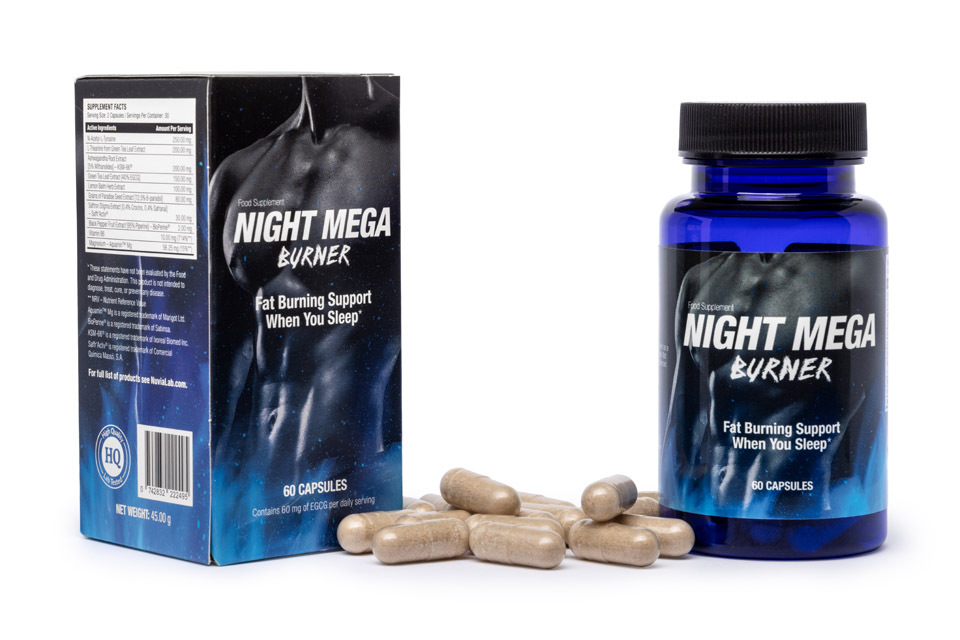
Stimulant-free nighttime fat-burning formula with 10 active ingredients including ashwagandha, white kidney bean extract, chromium and magnesium. Designed to support fat oxidation and sleep quality simultaneously.
View offer →